
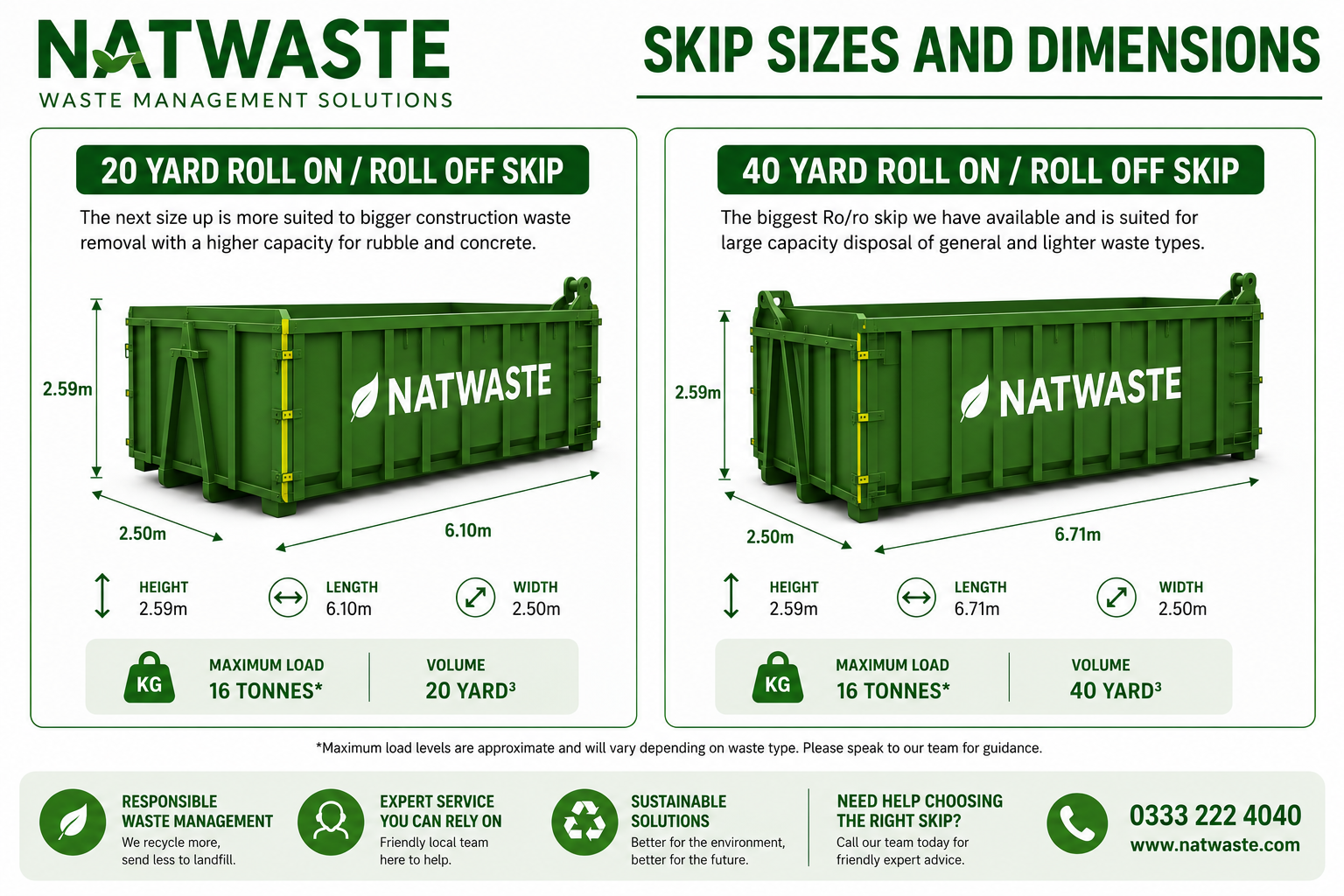
Open and enclosed RoRo skips, Roll On / Roll Off skips (often called Ro/Ro skips) are large waste containers designed for high-volume commercial and industrial waste.
Unlike standard builders skips, Ro/Ro containers are delivered and collected using specialist hook-lift vehicles that literally roll the container on and off the truck.
They are ideal for:
- construction projects
- factory waste
- demolition work
- bulky commercial waste
- large site clearances
What Is the Difference Between a Standard Skip and a Ro/Ro?
| Standard Skip | Ro/Ro Skip |
|---|---|
| Smaller sizes | Much larger capacity |
| Usually loaded by hand | Often loaded by machinery |
| Domestic & small commercial use | Large commercial & industrial use |
| Delivered by skip lorry | Delivered by hook-lift Ro/Ro vehicle |
Common Ro/Ro Sizes
20 Yard Ro/Ro
Ideal for:
- heavy waste
- rubble
- construction materials
- soil and hardcore
Smaller capacity but stronger loading capability.
40 Yard Ro/Ro
Ideal for:
- light bulky waste
- cardboard
- plastics
- general commercial waste
Maximum volume capacity for lighter materials.
Open Ro/Ro Containers
What Are Open Containers?
Open RoRo skips have no roof or lid.
They are the most common type of container and are ideal for:
- bulky waste
- loading with machinery
- easy top-loading access
Common Uses
- construction waste
- wood
- metal
- general bulky waste
- demolition materials
Advantages
- easy to load
- suitable for excavators/loading shovels
- ideal for oversized materials
Important Note
Because they are open:
- rainwater can enter
- lightweight waste may blow away
- unsuitable for some confidential or lightweight materials
Enclosed Ro/Ro Containers
What Are Enclosed Containers?
Enclosed Ro/Ro containers are fitted with:
- solid roofs
- lockable doors
- enclosed sides
They are designed for waste that needs:
- containment
- security
- weather protection
Common Uses
- confidential waste
- paper & cardboard
- plastics
- packaging waste
- retail & warehouse waste
Advantages
- prevents waste escaping
- keeps waste dry
- improves security
- reduces contamination
- better for lightweight materials
Which Ro/Ro Container Do I Need?
Open Ro/Ro
Best for:
- heavy waste
- construction projects
- large bulky materials
Enclosed Ro/Ro
Best for:
- dry mixed recycling
- cardboard
- confidential waste
- lightweight commercial waste
Can Ro/Ro Containers Be Recycled?
Yes — many Ro/Ro containers are specifically used for segregated recycling streams such as:
- cardboard
- plastics
- wood
- metal
- mixed recycling
The cleaner the waste stream, the more material can be successfully recycled.
Important Loading Rules
Ro/Ro containers:
- must not be overloaded
- must not contain prohibited waste
- need safe, level access for collection vehicles
Heavy materials such as soil or hardcore may require smaller containers due to weight restrictions.
Typical Industries Using Ro/Ro Containers
- Construction
- Manufacturing
- Retail
- Warehousing
- Logistics
- Demolition
- Local Authorities
- Distribution Centres
Need Help Choosing?
Choosing the correct Ro/Ro container depends on:
- waste type
- weight
- available space
- access restrictions
- recycling requirements
NatWaste can help recommend the most suitable open or enclosed container for your site and waste stream.